Can Dogs Eat Animal Crackers? | Vet-Reviewed Guide (2026)

Yes, dogs can eat plain animal crackers in small amounts, but they are not a healthy treat. They contain added sugar, refined flour, and salt, which provide little nutritional value. Avoid chocolate-covered, frosted, or xylitol-containing varieties, and offer healthier dog-safe treats whenever possible.
In this guide, you’ll learn whether dogs can eat animal crackers safely, what ingredients to watch for, how many are too many, what to do if your dog eats a large amount, and which healthier treats are better for long-term health.
What Are Animal Crackers?
Animal crackers are small, sweet baked snacks made primarily from refined wheat flour, sugar, vegetable oil, salt, and baking ingredients. They are shaped like animals and marketed as a fun snack for children and adults.
Although they resemble cookies, they are often less sweet than traditional biscuits. While animal crackers are generally safe for dogs in small amounts, they provide little nutritional value and should only be offered as an occasional treat, not a regular part of a dog’s diet.
Are Animal Crackers Safe for Dogs?

For most healthy adult dogs, eating one or two plain animal crackers by accident is generally safe. The biggest concern is not toxicity but poor nutrition. These crackers are high in carbohydrates and sugar while providing almost no protein, vitamins, or minerals that benefit your dog’s body.
Dogs digest processed foods differently than humans. While a single cracker is unlikely to cause problems, frequent feeding can contribute to unnecessary calorie intake and unhealthy eating habits. Small breeds, puppies, overweight dogs, and dogs with diabetes or digestive disorders are more likely to experience negative effects from sugary snacks.
If your dog has never eaten animal crackers before, even a small amount may cause mild stomach upset. Some dogs develop temporary gas, loose stools, or vomiting after eating processed foods, especially if they have sensitive digestive systems.
What Are Animal Crackers Made Of?
Understanding the ingredients helps explain why animal crackers are considered an occasional treat rather than a healthy snack.
| Ingredient | Is It Safe for Dogs? | Why It Matters |
| Refined wheat flour | Yes, in small amounts | Provides carbohydrates but very little nutrition. |
| Sugar | Not recommended | Adds empty calories and may contribute to obesity and dental disease. |
| Salt | Small amounts only | Too much sodium may lead to excessive thirst and digestive upset. |
| Vegetable or palm oil | Limited | High-fat ingredients may upset sensitive stomachs. |
| Artificial flavors and colors | Best avoided | Offer no health benefits and may trigger stomach irritation in some dogs. |
| Preservatives | Limited | Processed additives are unnecessary for a dog’s diet. |
Some varieties contain icing, sprinkles, chocolate coating, or flavored fillings. These versions are much less suitable because they contain even more sugar and sometimes ingredients that can be dangerous for dogs.
Always check the ingredient label before sharing any packaged snack with your pet.
Why Animal Crackers Are Not a Healthy Treat for Dogs
Although animal crackers are not considered poisonous, they are far from an ideal snack. Dogs need diets rich in animal protein, healthy fats, vitamins, and minerals. Animal crackers provide mostly refined carbohydrates and sugar, which do not support your dog’s nutritional needs.
Added Sugar Increases Health Risks
Dogs do not require added sugar in their diet. Eating sugary foods regularly may contribute to weight gain because the extra calories are stored as body fat. Excess sugar can also increase the risk of dental plaque and gum disease over time.
In dogs already prone to obesity or diabetes, sugary snacks can make weight management even more difficult. While one cracker is unlikely to cause long-term harm, repeated treats can gradually affect overall health.
Refined Flour Offers Little Nutrition
Most animal crackers are made with refined wheat flour. During processing, much of the natural fiber and nutrients are removed. As a result, these crackers provide calories without meaningful nutrition.
Instead of supporting muscle development or immune health, refined carbohydrates mainly provide quick energy that dogs do not necessarily need outside of their normal diet.
Sodium Can Become a Problem
Animal crackers usually contain less salt than many other snack foods, but they still contribute additional sodium to your dog’s daily intake. A healthy dog can usually tolerate the small amount found in one cracker, but eating many crackers at once may increase thirst and contribute to digestive discomfort.
Very large amounts of salty foods can become dangerous, particularly for small dogs.
Artificial Ingredients May Upset Sensitive Dogs
Many commercial animal crackers contain artificial flavors, food dyes, or preservatives. Although these ingredients are generally considered safe for people, they provide no benefit for dogs.
Some dogs with food sensitivities may experience stomach upset after eating processed snacks containing artificial additives. Mild vomiting, diarrhea, or gas are the most common reactions.
Empty Calories Can Lead to Obesity
Perhaps the biggest concern is that animal crackers contain empty calories. Every unnecessary snack reduces room for nutrient-rich foods that actually support your dog’s health.
Treats should make up no more than about 10% of your dog’s daily calorie intake. If processed snacks become a regular habit, dogs may gradually gain excess weight, increasing the risk of arthritis, heart disease, and other chronic health conditions.
What Happens If a Dog Eats Animal Crackers?
In most cases, nothing serious happens after a healthy dog eats one or two plain animal crackers. Many dogs digest them without showing any symptoms.
However, every dog is different. Some pets have sensitive stomachs and may experience mild digestive problems after eating processed foods.
Possible symptoms include:
- Mild vomiting
- Soft stools or diarrhea
- Gas
- Temporary bloating
- Mild stomach discomfort
- Increased thirst after eating several crackers
These symptoms usually improve within a day as long as your dog returns to its normal diet and continues drinking water.
If your dog eats an entire box of animal crackers, the large amount of sugar, refined carbohydrates, and sodium may cause more noticeable digestive problems. While this situation is rarely life-threatening, monitoring your dog closely is important.
How Many Animal Crackers Can Dogs Eat?

Animal crackers should never become a regular part of your dog’s diet. If you decide to offer one as an occasional treat, the amount should depend on your dog’s size.
Small dogs should have no more than one small cracker. Medium-sized dogs can occasionally eat one or two crackers, while larger breeds may tolerate two or three plain crackers without difficulty.
Even for large dogs, these treats should only be given occasionally rather than daily. Dogs that are overweight, diabetic, have pancreatitis, or suffer from food allergies should avoid animal crackers altogether unless your veterinarian recommends otherwise.
Remember that healthy dog treats are always a better choice than processed human snacks.
When Do Animal Crackers Become Dangerous?
Plain animal crackers rarely cause serious problems on their own, but some varieties can become dangerous because of the extra ingredients they contain.
Chocolate-covered animal crackers should always be treated as an emergency because chocolate contains theobromine and caffeine, both of which are toxic to dogs. Symptoms may include vomiting, rapid breathing, tremors, seizures, and an increased heart rate.
Animal crackers made with xylitol, an artificial sweetener, are even more dangerous. Although xylitol is uncommon in traditional animal crackers, some sugar-free or specialty baked snacks may contain it. Even a small amount can cause a sudden drop in blood sugar and potentially life-threatening liver damage.
Large quantities of any animal crackers can also become a problem. Eating an entire package may result in severe stomach upset, vomiting, diarrhea, abdominal pain, excessive thirst, or bloating. Dogs that consume large amounts of sugary, fatty foods may also have an increased risk of developing pancreatitis, a painful condition that requires prompt veterinary care.
Whenever your dog eats flavored, frosted, chocolate-coated, or sugar-free animal crackers, always check the ingredient label immediately. If chocolate or xylitol is listed, contact your veterinarian or an emergency animal poison service without delay.
Is There an Animal Cracker Made for Dogs?
Yes, several pet brands make dog-friendly treats shaped like animal crackers using ingredients that are safe and nutritious for dogs.
These treats are typically made with wholesome ingredients, contain no added sugar or harmful additives, and are formulated to support canine health. They are a much better choice than regular human animal crackers.
What Should You Do If Your Dog Eats Animal Crackers?
If your dog eats one or two plain animal crackers, there is usually no reason to worry. Most healthy dogs will digest them without any serious problems. Stay calm and observe your dog over the next 24 hours for any signs of stomach upset, such as vomiting, diarrhea, or loss of appetite.
The first thing you should do is check the ingredient label. Make sure the crackers do not contain chocolate, xylitol, raisins, macadamia nuts, or other ingredients that are toxic to dogs. Traditional animal crackers rarely contain these ingredients, but frosted, chocolate-covered, or specialty varieties sometimes do.
Provide your dog with fresh drinking water and continue feeding their regular diet. Avoid giving additional treats that day to reduce the chance of digestive upset. If your dog develops severe vomiting, repeated diarrhea, extreme tiredness, tremors, difficulty breathing, or any unusual behavior, contact your veterinarian immediately.
Can Dogs Eat Other Types of Crackers?
Many dog owners wonder whether different crackers are any safer than animal crackers. Unfortunately, most crackers share similar problems because they contain refined flour, salt, oils, and preservatives.
Can Dogs Eat Town House Crackers?
Town House crackers contain butter, vegetable oils, and a relatively high amount of fat. Eating one small cracker is unlikely to harm a healthy dog, but they should not become part of your dog’s diet.
Can Dogs Eat Graham Crackers?
Yes, dogs can eat plain graham crackers in small amounts, but they are not a healthy treat. They contain sugar, refined flour, and sometimes cinnamon or honey. Occasional bites are usually safe, but regular feeding may contribute to weight gain.
Can Dogs Have Goldfish Crackers?
Dogs can eat one or two Goldfish crackers without serious harm, but they are not recommended. Goldfish crackers contain cheese, salt, oils, and preservatives that offer no nutritional benefits and may upset your dog’s stomach if eaten frequently.
Can Dogs Eat Saltine Crackers?
Yes, dogs can eat plain saltine crackers occasionally, but they are not a healthy snack. They contain refined flour and sodium without valuable nutrients. Too many saltine crackers may cause increased thirst, stomach upset, or unnecessary calorie intake.
Can Dogs Have Saltine Crackers?
Dogs can have a plain saltine cracker in moderation, but they should not eat them regularly. Their high sodium content and lack of nutritional value make them a poor treat. Healthier dog-safe snacks are always a better option.
Can Dogs Eat Peanut Butter Crackers?
No, peanut butter crackers are not recommended for dogs. They often contain added sugar, salt, oils, and artificial ingredients. Some may even contain xylitol, which is extremely toxic to dogs. Always check ingredient labels before sharing human snacks.
Can Dogs Have Rice Crackers?
Dogs can eat plain rice crackers in small amounts if they are unsalted and unseasoned. They are not toxic but provide little nutritional value. Flavored rice crackers containing garlic, onion, or excessive salt should always be avoided.
Can Dogs Have Frosted Animal Crackers?
No, frosted animal crackers are not a good choice for dogs. The frosting contains extra sugar, artificial colors, and additives that increase health risks. Plain dog treats or fresh fruits and vegetables are much healthier alternatives for rewarding your pet.
Can Dogs Eat Barnum’s Animal Crackers?
Yes, dogs can eat Barnum’s Animal Crackers occasionally in small amounts. They are not toxic but contain sugar, refined flour, and salt that provide little nutritional value. They should only be an occasional treat, not a regular snack.
Can Dogs Eat Iced Animal Crackers?
Dogs should not eat iced animal crackers because the icing adds extra sugar, artificial colors, and unnecessary calories. Eating one accidentally is usually not dangerous, but frequent consumption can contribute to obesity, dental disease, and digestive problems over time.
Can Puppies Eat Animal Crackers?
Puppies should not eat animal crackers because their digestive systems are more sensitive than adult dogs. The added sugar, refined flour, and processed ingredients may cause stomach upset. Puppy-specific treats are safer and provide better nutrition for healthy growth.
Can Dogs Eat Crackers?
Dogs can eat plain crackers in small amounts, but they are not nutritious. Most crackers contain refined flour, salt, and preservatives that offer no health benefits. They should only be given occasionally, while balanced dog treats remain the better choice.
Can Dogs Eat Ritz Crackers?
Dogs can eat a small piece of a Ritz cracker, but they are not recommended. Ritz crackers contain butter, fat, and higher sodium levels than plain crackers. Frequent feeding may contribute to obesity, digestive issues, and unnecessary calorie consumption.
Can Dogs Eat Stauffer’s Animal Crackers?
Yes, dogs can eat Stauffer’s Animal Crackers occasionally if they are plain. Although they are not toxic, they contain sugar, wheat flour, and processed ingredients with little nutritional value. Regular feeding should be avoided to maintain your dog’s overall health.
Can Cats Eat Animal Crackers?
Cats can eat a tiny piece of an animal cracker without immediate harm, but they should not eat them regularly. Cats require meat-based nutrition, and sugary processed snacks offer no benefits while potentially causing digestive upset or unnecessary weight gain.
Can Dogs Eat SkyFlakes Crackers?
Dogs can eat plain SkyFlakes crackers in small amounts, but they are not a healthy snack. They contain refined flour and salt without important nutrients. Feeding them too often may contribute to digestive discomfort and unnecessary calorie intake over time.
Can Dogs Eat Frosted Animal Crackers?
No, dogs should not eat frosted animal crackers regularly. Their high sugar content and artificial ingredients make them an unhealthy treat. While one cracker is unlikely to cause serious harm, healthier dog treats are always the safer and better choice.
Can Dogs Eat Crackers for Upset Stomach?
No, regular crackers are not recommended for dogs with an upset stomach. Processed ingredients and sodium may worsen digestive problems. Veterinarians usually recommend bland foods like plain boiled chicken and cooked rice instead of crackers during recovery.
Can Dogs Eat Homemade Animal Crackers?
Yes, dogs can eat homemade animal crackers if they are made without chocolate, xylitol, excessive sugar, or harmful ingredients. Even homemade versions should only be offered occasionally because they still lack the balanced nutrition dogs need every day.
Can Diabetic Dogs Eat Animal Crackers?
No, diabetic dogs should avoid animal crackers because they contain added sugar and refined carbohydrates that may affect blood sugar levels. Dogs with diabetes should only receive treats recommended by their veterinarian as part of a carefully managed diet.
Can Senior Dogs Eat Animal Crackers?
Senior dogs can eat one plain animal cracker occasionally, but they are not recommended. Older dogs often have slower metabolisms and health conditions that make sugary, processed snacks less suitable. Nutritious, low-calorie treats are a much healthier choice.
Can Dogs Eat Animal Crackers Every Day?
No, dogs should not eat animal crackers every day. Daily consumption adds unnecessary sugar, sodium, and empty calories that may contribute to obesity, dental disease, and poor nutrition. Animal crackers should remain an occasional treat rather than a daily habit.
Do Animal Crackers Have Xylitol?
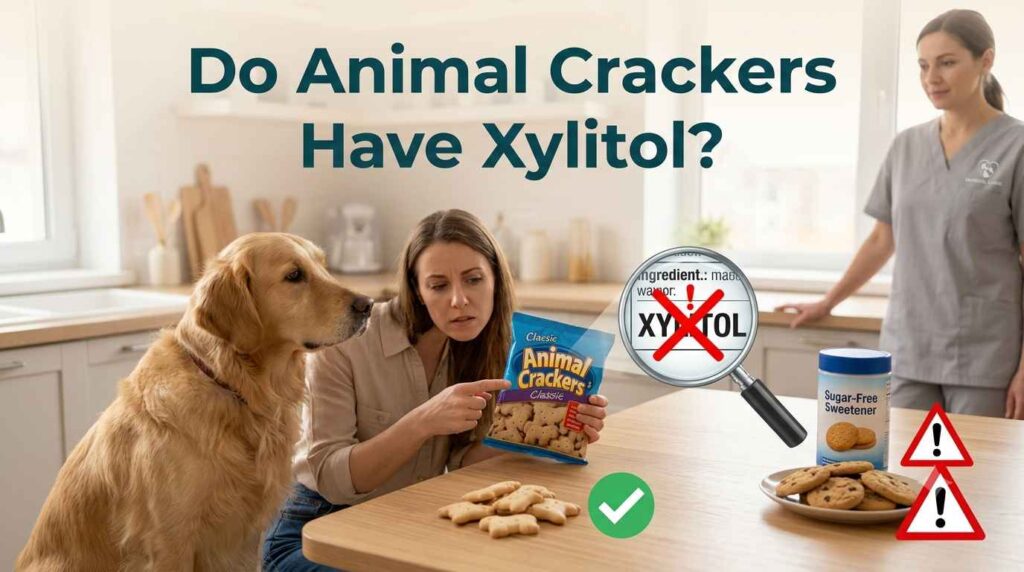
Traditional animal crackers usually do not contain xylitol. However, some sugar-free cookies and specialty baked snacks use this artificial sweetener instead of sugar.
Xylitol is extremely toxic to dogs. Even tiny amounts can cause dangerously low blood sugar within a short period and may lead to seizures, liver failure, or death if treatment is delayed.
Always read the ingredient label before giving any packaged snack to your dog. If you suspect your dog has eaten a product containing xylitol, contact your veterinarian immediately instead of waiting for symptoms to appear.
Are Animal Crackers Good for an Upset Stomach?
No. Animal crackers are not recommended for dogs with digestive problems.
Some people believe bland crackers settle an upset stomach, but this advice applies to humans, not dogs. Crackers contain processed ingredients that may actually irritate a dog’s digestive system.
Veterinarians usually recommend bland foods such as plain boiled chicken and cooked white rice for temporary stomach upset, depending on the dog’s condition.
Healthier Alternatives to Animal Crackers
If you enjoy rewarding your dog with snacks, there are many healthier choices that provide better nutrition than processed crackers.
Fresh carrot slices are low in calories and help support dental health through chewing. Apple slices without seeds provide fiber and vitamins while satisfying a dog’s preference for crunchy treats. Plain blueberries are rich in antioxidants and can be offered in moderation.
Small pieces of cooked chicken or turkey without seasoning make excellent high-protein rewards. Plain pumpkin puree is another nutritious option that may help support healthy digestion. Dog treats made specifically for canine nutrition remain the safest and healthiest choice because they are formulated to meet your pet’s dietary needs.
When Should You Call a Veterinarian?
Most dogs recover without treatment after eating one or two plain animal crackers. However, veterinary attention becomes important if your dog eats a large amount or consumes crackers containing toxic ingredients.
Contact your veterinarian immediately if your dog has eaten chocolate-covered or xylitol-containing crackers. You should also seek professional care if your dog develops repeated vomiting, severe diarrhea, abdominal swelling, difficulty breathing, tremors, seizures, collapse, unusual weakness, or refuses food for more than a day.
Puppies, senior dogs, diabetic dogs, and dogs with pancreatitis or chronic digestive disease should be monitored even more carefully because they are generally more sensitive to dietary changes.
FAQs about Animal Crackers
What Crackers Are OK for Dogs?
Plain, unsalted crackers are generally safe for dogs in very small amounts, but they are not nutritious. Avoid crackers containing chocolate, garlic, onion, xylitol, or excessive salt, and choose dog-specific treats whenever possible.
What Crackers Can Dogs Eat?
Dogs can occasionally eat plain crackers such as unsalted saltines or simple rice crackers in small portions. Flavored, buttery, cheesy, or heavily salted crackers should be avoided because they offer little nutrition and may upset your dog’s stomach.
Is It Safe for Dogs to Eat Animal Crackers?
Yes, plain animal crackers are generally safe for healthy dogs when given in moderation. They are not toxic, but their sugar, refined flour, and sodium content make them an occasional treat rather than a healthy everyday snack.
Are Animal Crackers Good for Dogs?
No, animal crackers are not considered good for dogs because they contain added sugar, refined carbohydrates, and processed ingredients with little nutritional value. Healthier dog treats or fresh dog-safe foods are much better choices.
Are Graham Crackers Good for Dogs?
No, graham crackers are not a healthy treat for dogs. Although plain graham crackers are not usually toxic, they contain added sugar and refined flour that provide empty calories and should only be offered rarely.
Are Goldfish Crackers Safe for Dogs?
Goldfish crackers are not recommended for dogs because they contain cheese, salt, oils, and artificial flavorings. Eating one or two accidentally is unlikely to cause harm, but regular feeding may lead to digestive upset and unnecessary weight gain.
Final Verdict: Should You Feed Animal Crackers to Dogs?
Dogs can eat plain animal crackers in small amounts, but they are not a healthy treat. While they are not toxic, they contain refined flour, added sugar, sodium, and processed ingredients that do not support a balanced canine diet. Giving your dog one or two plain crackers occasionally is unlikely to cause harm, but they should never replace nutritious dog treats or complete dog food.
If your dog accidentally eats a few animal crackers, there is usually no reason to panic. Simply check the ingredients, monitor your pet for any signs of digestive upset, and make sure fresh water is available. However, if the crackers contain chocolate, xylitol, or other toxic ingredients—or if your dog develops severe symptoms—seek veterinary care immediately.
For long-term health, the best approach is to reserve human snacks for rare occasions and reward your dog with treats specifically designed to meet their nutritional needs. A balanced diet, proper portion control, and healthy treats will do far more for your dog’s well-being than any packaged cracker ever could.