Can Dogs Have Ricotta Cheese? – Vet-Approved Guide (2026)

Yes, dogs can have ricotta cheese in moderation. Plain ricotta cheese is not toxic, but some puppies and adult dogs may struggle to digest dairy products, causing stomach upset or diarrhea sometimes.
In this article, you’ll learn whether dogs can have ricotta cheese safely, possible risks, healthy serving tips, and what veterinarians recommend for pets.
Is Ricotta Cheese Safe for Dogs?
Yes, dogs can usually eat plain ricotta cheese in moderation. Ricotta contains protein and calcium, which may provide small nutritional benefits. Still, many dogs have trouble digesting dairy products because they are sensitive to lactose.
Feeding too much ricotta cheese can cause digestive upset, especially in dogs with sensitive stomachs. Plain, low-fat ricotta is the safest option, while flavored or seasoned types should always be avoided.
Nutritional Benefits of Ricotta Cheese for Dogs

Good Source of Protein
Ricotta cheese contains protein that helps support healthy muscles and body functions. Protein also provides energy for active dogs.
Small servings of ricotta may be helpful as an occasional snack, especially for dogs that enjoy soft and creamy foods.
Contains Calcium
Calcium is important for strong bones and healthy teeth in dogs. Ricotta cheese naturally contains calcium, which may support bone health.
However, dogs already eating complete dog food usually get enough calcium from their regular daily meals.
Lower Fat Than Some Other Cheeses
Compared to cheddar or cream cheese, ricotta often contains less fat. This makes it a slightly lighter option for dogs. Low-fat ricotta is usually the better choice because too much fat may lead to obesity and digestive problems.
Soft Texture Makes It Easy to Eat
Ricotta cheese has a soft and smooth texture that many dogs find easy to chew and swallow. It may work well for older dogs or pets with dental issues that struggle with harder treats or crunchy snacks.
Also Read: Can Dogs Eat Banana Chips? – Benefits and Risks Explained
Risks of Feeding Ricotta Cheese to Dogs
Lactose Intolerance in Dogs
Many dogs cannot digest lactose properly, which is the natural sugar found in dairy products. Eating ricotta cheese may cause diarrhea, gas, bloating, or stomach pain in sensitive dogs. Some pets react strongly even after eating a small amount.
High Sodium in Flavored Ricotta
Some ricotta cheese products contain added salt, herbs, or seasoning. Too much sodium is unhealthy for dogs and may lead to dehydration or other health concerns. Plain ricotta without added flavoring is always the safest option for pets.
Too Much Fat Can Cause Health Problems
Even though ricotta is lower in fat than some cheeses, it still contains fat that may cause problems if overfed. Large amounts can increase the risk of obesity and pancreatitis, especially in dogs already struggling with weight issues.
Added Ingredients May Be Harmful
Certain ricotta dishes include dangerous ingredients like garlic, onion, chocolate, or artificial sweeteners. These ingredients can be toxic to dogs. Always check labels carefully and avoid giving dogs ricotta foods prepared for human meals or desserts.
Can Puppies Have Ricotta Cheese?
Puppies can sometimes eat tiny amounts of plain ricotta cheese, but owners should be very careful. Young dogs often have sensitive stomachs and may react badly to dairy products.
If you decide to offer ricotta, start with a very small taste and watch for signs like diarrhea or vomiting. Puppies should mainly eat high-quality puppy food that provides complete nutrition for healthy growth and development.
How Much Ricotta Cheese Can Dogs Eat?
Small Dogs
Small dogs should only eat about one teaspoon of plain ricotta cheese at a time. Their smaller bodies are more sensitive to rich foods, so even tiny amounts may cause stomach upset if they eat too much too quickly.
Medium Dogs
Medium-sized dogs can usually handle one or two tablespoons of plain ricotta cheese occasionally. It should not become a regular part of meals. Feeding moderate portions helps reduce the risk of digestive issues and unnecessary weight gain over time.
Large Dogs
Large dogs may safely eat two or three tablespoons of ricotta cheese once in a while. Even though bigger dogs tolerate larger portions, overfeeding dairy products can still lead to stomach discomfort, obesity, or other health problems later.
How Often Can Dogs Eat Ricotta Cheese?
Ricotta cheese should only be offered occasionally, not every day. Once or twice a week in small amounts is usually enough for healthy dogs. Treats should make up only a small part of a dog’s daily calorie intake.
Read More: Is Fabuloso Safe For Dogs? – Vet-Style Answer Explained!
Symptoms of Too Much Ricotta Cheese in Dogs
Upset Stomach
Dogs that eat too much ricotta cheese may develop stomach discomfort shortly afterward. They might seem restless, uncomfortable, or less active than usual. Mild stomach upset often improves with rest, but severe symptoms may require veterinary attention and care.
Vomiting
Vomiting can happen when dogs struggle to digest dairy products like ricotta cheese. This reaction may occur because of lactose intolerance or eating too much fat. Repeated vomiting should never be ignored and may require immediate veterinary advice.
Diarrhea
Diarrhea is one of the most common signs of dairy sensitivity in dogs. Loose stools may appear after eating ricotta cheese, especially in lactose-intolerant pets. Continuous diarrhea can lead to dehydration if the problem becomes severe or prolonged.
Gas or Bloating
Some dogs develop gas and bloating after eating dairy foods. Excessive gas may cause discomfort and stomach swelling. Dogs with sensitive digestion are more likely to experience bloating, especially if ricotta cheese is introduced too quickly into their diet.
Loss of Appetite
Dogs feeling sick after eating ricotta cheese may refuse food temporarily. Loss of appetite often happens alongside vomiting or stomach discomfort. If your dog stops eating for an extended period, contacting a veterinarian is usually the safest decision.
Best Type of Ricotta Cheese for Dogs
Plain Ricotta Cheese
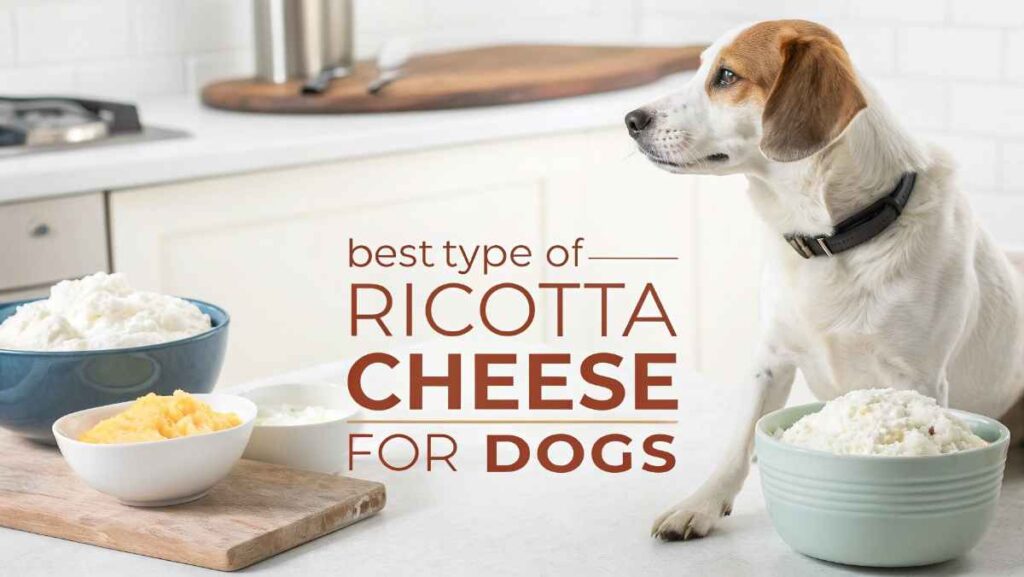
Plain ricotta cheese without seasoning or added ingredients is the safest option for dogs. It contains fewer harmful additives and lower sodium levels. Always choose simple ricotta products made with basic ingredients whenever possible for better safety.
Low-Fat Ricotta Cheese
Low-fat ricotta cheese is often a better choice for dogs because it contains fewer calories and less fat. Lower-fat foods may help reduce the risk of obesity and pancreatitis while still providing a creamy texture dogs enjoy eating.
Avoid Sweetened or Seasoned Ricotta
Sweetened ricotta or flavored varieties should never be fed to dogs. Ingredients like sugar, garlic, onions, herbs, or artificial sweeteners may be dangerous. Some seasonings can even become toxic, making flavored ricotta unsafe for pets to consume.
When Dogs Should Avoid Ricotta Cheese Completely
Dogs With Dairy Allergies
Dogs with dairy allergies should never eat ricotta cheese because it may trigger itching, stomach problems, or skin irritation.
Allergic reactions can vary from mild discomfort to more serious symptoms requiring immediate veterinary treatment and professional medical care.
Dogs With Pancreatitis
Pancreatitis is a painful condition often linked to fatty foods. Even small amounts of cheese may trigger flare-ups in sensitive dogs.
Dogs diagnosed with pancreatitis should avoid ricotta cheese completely unless a veterinarian specifically approves limited feeding.
Overweight Dogs
Ricotta cheese contains calories and fat that may contribute to unhealthy weight gain. Overweight dogs already face increased health risks, so adding extra treats can make weight management more difficult and negatively affect long-term health and mobility.
Dogs With Sensitive Stomachs
Dogs with sensitive digestion often react poorly to dairy foods, including ricotta cheese. Even tiny portions may cause diarrhea, bloating, or vomiting. Owners of sensitive dogs should be cautious and avoid introducing unnecessary foods into the diet.
Healthier Cheese Alternatives for Dogs
Cottage Cheese
Cottage cheese is often easier for dogs to digest because it usually contains less lactose than many other dairy products. Plain, low-fat cottage cheese can sometimes work as a safer occasional snack for dogs with mild dairy sensitivity.
Mozzarella
Plain mozzarella cheese contains lower sodium levels than many processed cheeses, making it a slightly safer choice for dogs. Small portions may work well as training treats, but moderation remains important because mozzarella still contains fat and calories.
Plain Yogurt
Plain yogurt with active cultures may be easier for some dogs to digest than regular cheese products. Probiotics found in yogurt can sometimes support healthy digestion. Always choose unsweetened yogurt without artificial sweeteners or harmful added flavors.
Dog-Friendly Treats
Commercial dog treats designed specifically for pets are usually safer than human dairy products. These treats are made with canine nutrition in mind and often contain fewer ingredients that may upset a dog’s stomach or digestive system.
Tips for Feeding Ricotta Cheese Safely to Dogs
If you decide to give your dog ricotta cheese, a few simple safety steps can help reduce the risk of problems. Start with a tiny amount and monitor your dog carefully afterward. Choose plain, low-fat ricotta without seasoning or sweeteners.
Avoid feeding ricotta every day because too much dairy may lead to stomach upset or weight gain. If your dog shows signs of digestive trouble after eating ricotta cheese, stop feeding it immediately and contact a veterinarian if symptoms continue.
Read Out: How Much Pepto To Give A Dog? – Safe Dosage & Vet Advice!
Can Dogs Eat Foods Made With Ricotta Cheese?
Ricotta Pasta Filling
Ricotta pasta fillings often contain garlic, onions, spices, and large amounts of salt. These ingredients are unhealthy and sometimes toxic for dogs. Pasta dishes may also contain heavy sauces and extra fat that upset a dog’s stomach.
Ricotta Cheesecake
Ricotta cheesecake is not safe for dogs because it contains sugar, butter, and other rich ingredients. Some recipes may even include chocolate or artificial sweeteners that are toxic. Sugary desserts can also contribute to unhealthy weight gain in dogs.
Lasagna With Ricotta
Lasagna made with ricotta cheese usually includes onions, garlic, tomato sauce, and oily meat. These ingredients can irritate a dog’s stomach and may become dangerous in larger amounts. Lasagna should never be considered a healthy dog treat.
Baked Goods Containing Ricotta
Baked foods made with ricotta cheese often contain sugar, salt, butter, or artificial ingredients unsuitable for dogs. Some recipes may include raisins or chocolate, which are toxic to pets. Plain dog treats are always the safer option.
What Do Veterinarians Say About Cheese for Dogs?

Most veterinarians agree that small amounts of plain cheese can be safe for many healthy dogs. However, moderation is extremely important because dairy products are not necessary for canine nutrition.
Some dogs digest cheese without issues, while others experience stomach upset quickly. Veterinarians often recommend choosing low-fat, low-sodium cheese products and avoiding heavily processed varieties. They also remind owners that treats should never replace balanced dog food designed to meet a dog’s nutritional needs.
Can Dogs Eat Other Types of Cheese?
Can Dogs Have Mozzarella Cheese?
Dogs can have mozzarella cheese occasionally in small portions. Plain mozzarella is lower in salt than many processed cheeses, making it a slightly safer option. However, too much cheese may still lead to weight gain, digestive problems, or stomach discomfort in dogs.
Can Dogs Have Feta Cheese?
Feta cheese is not the best option for dogs because it contains high amounts of salt and fat. Eating too much feta may cause dehydration, stomach problems, or weight gain. Small bites are unlikely to harm healthy dogs, but moderation is always important.
Can Dogs Have Cheese Balls?
Cheese balls are not recommended for dogs because they are heavily processed and often contain salt, artificial flavors, and unhealthy fats.
These snacks may upset your dog’s stomach and provide very little nutritional value compared to healthier treat options.
Can Dogs Have Cheese Sticks?
Dogs can sometimes eat plain cheese sticks in small amounts, especially mozzarella sticks without seasoning. However, cheese sticks still contain fat and calories that may lead to obesity or digestive upset if dogs eat them too often.
Can Dogs Have Cheese Puffs?
Cheese puffs are unhealthy for dogs because they contain artificial ingredients, salt, oils, and preservatives.
These processed snacks offer no real nutritional benefits and may lead to stomach upset, obesity, or other long-term health problems in dogs.
Can Dogs Have Cheese Pizza?
Cheese pizza is not a healthy food for dogs because it usually contains extra fat, salt, tomato sauce, and seasonings like garlic or onions. Regular feeding may cause digestive issues, unhealthy weight gain, or other health concerns over time.
Can Dogs Have Cheese Curds?
Plain cheese curds are usually safe for dogs in very small amounts, but they are often high in fat and sodium. Eating too many cheese curds may cause stomach upset, bloating, or unhealthy weight gain in sensitive dogs.
Can Dogs Have Cheese Popcorn?
Cheese popcorn is not safe for dogs because it often contains butter, salt, oils, and artificial flavoring. These ingredients may upset your dog’s stomach and contribute to obesity. Plain popcorn without seasoning is usually a safer occasional snack.
Can Dogs Have Cheesecake?
Cheesecake is not recommended for dogs because it contains sugar, butter, cream cheese, and other rich ingredients.
Some cheesecakes also include chocolate or artificial sweeteners that are toxic and dangerous for dogs if accidentally eaten.
Can Dogs Have Cheese Crackers?
Cheese crackers are not healthy for dogs because they usually contain salt, preservatives, and processed ingredients.
While one small cracker may not harm most dogs, regular feeding can contribute to digestive problems and excessive sodium intake.
Can Dogs Have Cheese Doodles?
Cheese doodles should be avoided because they are highly processed snacks filled with artificial flavors, oils, and salt.
These unhealthy ingredients can upset your dog’s stomach and may increase the risk of obesity or other health issues over time.
Can Dogs Have Cheese?
Yes, dogs can have cheese in moderation if they tolerate dairy products well. Plain, low-fat cheeses are usually safer choices.
However, some dogs are lactose intolerant, so eating cheese may cause bloating, diarrhea, gas, or digestive discomfort.
Ricotta or Cottage Cheese for Dogs
Ricotta and cottage cheese are usually safe for dogs in small amounts. Cottage cheese often contains less lactose, making it easier to digest. Plain, low-fat versions are the best choice because too much dairy may cause stomach upset or diarrhea in sensitive dogs.
Can Dogs Have Pasta
Plain cooked pasta is usually safe for dogs in moderation. However, pasta dishes with garlic, onions, butter, or heavy sauces should be avoided because these ingredients may upset your dog’s stomach or become harmful if eaten in large amounts regularly.
Frequently Asked Questions
Can Dogs Have Ricotta Cheese Every Day?
Dogs should not eat ricotta cheese every day because too much dairy may cause stomach problems, weight gain, or digestive upset in sensitive dogs over time.
Can Ricotta Cheese Be Used as a Dog Food Topper?
Yes, small amounts of plain ricotta cheese can be used as a dog food topper occasionally to add flavor and encourage picky dogs to eat meals.
What Kind of Cheese Is Good for Dogs?
Plain, low-fat cheeses like mozzarella, cottage cheese, and ricotta are usually better for dogs because they contain less salt and lower fat levels overall.
Is It Okay for Dogs to Eat Ricotta Cheese?
Yes, dogs can eat plain ricotta cheese in moderation. However, some dogs cannot digest dairy properly and may develop gas, diarrhea, or stomach discomfort afterward.
Is Cottage Cheese or Ricotta Better for Dogs?
Cottage cheese is often better for dogs because it usually contains less lactose and fat, making it easier for many dogs to digest comfortably.
Final Verdict
Dogs can usually have plain ricotta cheese in small amounts without serious problems. Its soft texture and lower fat content make it a slightly better choice than some other cheeses. However, ricotta still contains lactose and fat, which may cause digestive upset in sensitive dogs. Plain, low-fat ricotta offered occasionally is the safest option. Avoid flavored varieties and ricotta dishes made with harmful ingredients like garlic or onions. As with any treat, moderation is important, and owners should always watch for signs of stomach problems after feeding dairy products to their pets.
If your dog has health problems or food sensitivities, consult your veterinarian before adding ricotta cheese to their diet.