Can My Dog Have Down Syndrome? – Vet-Approved Facts!
Dogs cannot have Down syndrome because their chromosomes are different from humans. However, some health conditions may cause similar symptoms.
In this article, you’ll learn whether dogs can have Down syndrome, common symptoms to watch for, possible causes, and when veterinary care is needed.
What is Down Syndrome?
Down syndrome is a genetic condition that affects humans. It happens when a person is born with an extra copy of chromosome 21.
Humans normally have 23 pairs of chromosomes. These chromosomes carry genetic information that controls growth, development, and body functions. In people with Down syndrome, the extra chromosome changes how the body and brain develop.
This condition may cause:
- Mild to moderate intellectual disability
- Distinct facial features
- Low muscle tone
- Delayed development
- Increased risk of certain medical conditions
According to medical experts and organizations such as the National Down Syndrome Society, Down syndrome affects every individual differently. Some people experience mild symptoms, while others need lifelong medical support.
Dogs, however, have a completely different genetic structure. Humans have 46 chromosomes, while dogs have 78 chromosomes. Because of this major difference, dogs cannot develop the exact same chromosomal disorder as humans.
Traits Associated With Down Syndrome
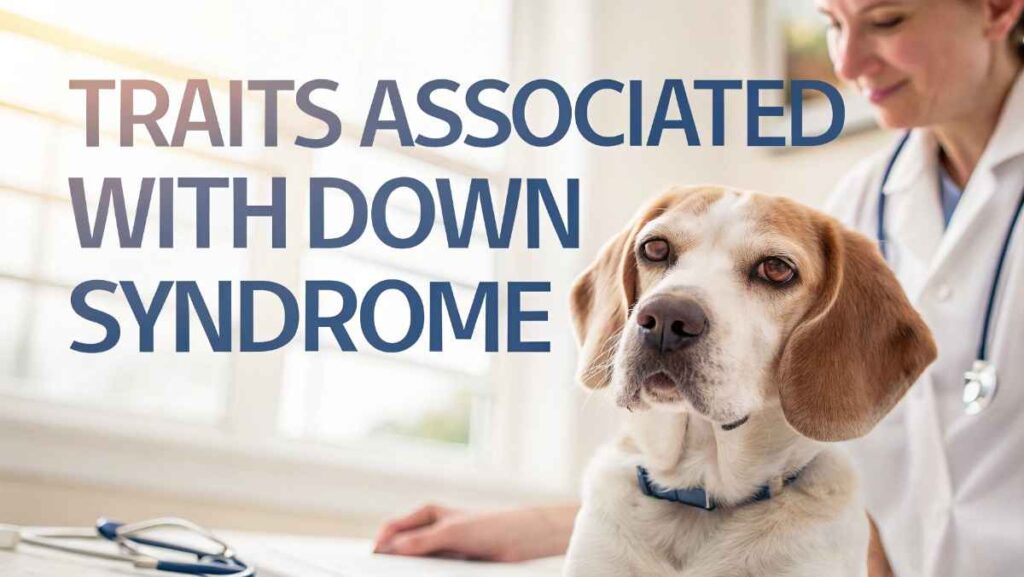
Although dogs cannot have true Down syndrome, understanding the common traits linked to the condition can help explain why some pets appear similar.
People with Down syndrome may have:
- Flattened facial features
- Upward-slanting eyes
- Small stature
- Poor muscle tone
- Delayed physical development
- Learning difficulties
- Hearing or vision problems
When dogs show similar characteristics, owners may immediately think of Down syndrome. For example, some dogs may have:
- A broad or flat face
- Slow growth
- Weak muscles
- Trouble walking normally
- Difficulty responding to training
- Delayed reactions
These symptoms can feel alarming, especially in puppies. However, many different canine health conditions can produce these signs.
It is important to remember that appearance alone cannot diagnose any medical condition.
Can Dogs Have Down Syndrome?
The clear scientific answer is no. Dogs cannot have Down syndrome in the same way humans do.
Down syndrome specifically involves chromosome 21 in humans. Dogs do not have the same chromosome arrangement, so they cannot develop this exact condition.
Veterinary researchers believe there are several reasons why Down syndrome has not been identified in dogs:
- Genetic differences between humans and dogs
- Severe chromosomal abnormalities often prevent survival in puppies
- Some rare disorders may go undiagnosed
Even though true Down syndrome does not exist in dogs, some developmental and congenital disorders can create similar symptoms.
This is why many pet owners become confused.
The good news is that many dogs with developmental conditions can still enjoy loving, joyful, and meaningful lives with proper veterinary care.
Why Some Dogs Look Like They Have Down Syndrome
Some dogs naturally have unusual facial structures or body shapes because of their breed.
For example:
- Bulldogs have flat faces
- Pugs have large eyes
- Dachshunds have short limbs
These features are normal for those breeds and are not signs of a chromosomal disorder.
In other cases, health problems during development may affect a puppy’s appearance, growth, or behavior.
Signs that may concern owners include:
- Eyes that do not focus properly
- Poor coordination
- Delayed growth
- Weak muscles
- Trouble hearing
- Difficulty learning
These symptoms deserve veterinary attention because they may point to an underlying health issue that requires treatment.
Can Dogs Have Mental Disabilities?
Yes. Dogs can experience neurological or developmental disorders that affect learning, behavior, and physical coordination.
Some dogs may:
- Learn commands slowly
- Struggle with social interaction
- Have trouble recognizing people
- Show unusual behavior patterns
- Experience seizures or balance problems
These issues may result from birth defects, brain abnormalities, infections, injuries, or hormone disorders.
A caring veterinary evaluation can help identify the root cause and improve your dog’s quality of life.
Conditions that Look Like Down Syndrome in Dogs
Several canine conditions can mimic the symptoms people associate with Down syndrome.
Understanding these disorders can help owners make informed decisions and avoid dangerous misinformation online.
Congenital Hypothyroidism
Congenital hypothyroidism is one of the most common conditions mistaken for Down syndrome in dogs.
This condition occurs when a puppy is born with low thyroid hormone levels.
Thyroid hormones are essential for:
- Brain development
- Muscle growth
- Bone development
- Energy regulation
Without enough thyroid hormone, puppies may develop:
- Slow growth
- Short legs
- Large tongue
- Mental dullness
- Weak muscles
- Delayed opening of eyes and ears
The encouraging news is that early treatment with thyroid medication can greatly improve a dog’s health and development.
Pituitary Dwarfism
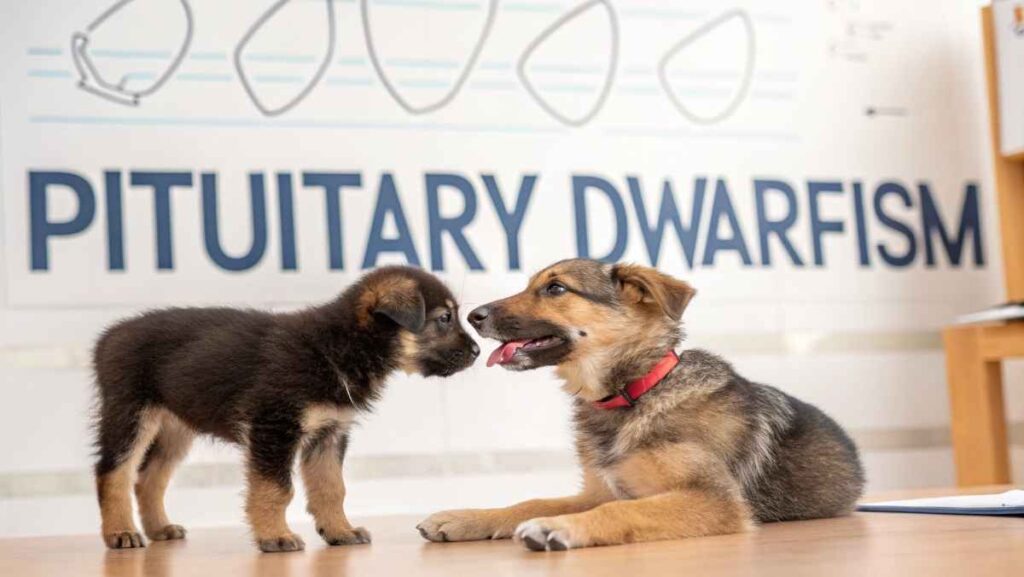
Pituitary dwarfism affects growth hormone production.
Dogs with this condition may appear:
- Very small for their age
- Weak or fragile
- Slow to develop physically
They may also have:
- Thin hair
- Skin problems
- Delayed teeth growth
Certain breeds, especially German Shepherds, are more likely to develop pituitary dwarfism.
Congenital Hydrocephalus
Hydrocephalus is a condition where fluid builds up inside the brain.
This pressure can affect normal brain function and development.
Signs may include:
- Enlarged head
- Difficulty walking
- Vision problems
- Confusion
- Seizures
- Delayed learning
Toy breeds such as Chihuahuas are more at risk.
Early veterinary care is extremely important because severe hydrocephalus can become life-threatening.
Growth Hormone Deficiency
Growth hormone deficiency can cause dogs to remain unusually small and underdeveloped.
Symptoms may include:
- Stunted growth
- Weak bones
- Delayed maturity
- Poor coat quality
Some dogs respond well to hormone therapy under veterinary supervision.
Portosystemic Shunt
A portosystemic shunt is a liver condition where blood bypasses the liver instead of being properly filtered.
This can allow toxins to affect the brain.
Dogs with this condition may experience:
- Confusion
- Poor growth
- Weakness
- Odd behavior
- Seizures
Treatment may involve special diets, medications, or surgery.
When Should You Visit a Veterinarian?
You should contact your veterinarian if your dog shows:
- Delayed growth
- Trouble walking
- Poor coordination
- Weak muscles
- Vision or hearing problems
- Frequent confusion
- Seizures
- Loss of appetite
- Extreme fatigue
Early diagnosis can make a huge difference.
Many developmental conditions respond better when treated early in life.
A veterinarian may recommend:
- Blood tests
- Hormone testing
- Brain imaging
- Genetic testing
- Neurological exams
These tests help identify the real cause of your dog’s symptoms.
How Vets Diagnose Developmental Problems in Dogs
Veterinarians do not diagnose dogs with “Down syndrome.” Instead, they search for specific medical conditions causing the symptoms.
The diagnostic process may include:
Physical Examination
During a physical examination, the veterinarian checks your dog’s body structure, muscle tone, movement, coordination, weight, and overall behavior.
This first step helps spot visible signs of developmental issues and guides the vet toward additional testing if needed.
Blood Testing
Blood tests help veterinarians detect hormone imbalances, infections, organ problems, or nutritional deficiencies that may affect your dog’s growth and behavior.
These tests provide valuable information about your dog’s internal health and help rule out several medical conditions.
Imaging Tests
Imaging tests such as X-rays, CT scans, or MRIs allow vets to examine your dog’s bones, brain, and internal organs closely.
These tests can reveal developmental abnormalities, brain swelling, or other hidden conditions affecting your dog’s health and behavior.
Neurological Evaluation
A neurological evaluation checks how your dog’s brain and nervous system are functioning. The vet may examine reflexes, balance, coordination, and reactions to sounds or movement to identify possible nerve or brain-related developmental problems affecting daily life.
Genetic Testing
Genetic testing helps veterinarians look for inherited disorders or rare chromosome abnormalities in dogs. Although dogs cannot have true Down syndrome, these tests may identify genetic conditions responsible for unusual physical traits or developmental health concerns.
Can Dogs With Developmental Disorders Live Happy Lives?
Absolutely, Many dogs with developmental conditions live loving, joyful lives with supportive care.
Dogs do not judge themselves based on appearance or intelligence. They simply want:
- Love
- Safety
- Comfort
- Food
- Attention
- Playtime
With patience and proper medical support, many special-needs dogs thrive in caring homes.
Simple adjustments can help greatly:
- Maintain a consistent routine
- Use gentle training methods
- Provide soft bedding
- Avoid stressful environments
- Schedule regular vet visits
Special-needs dogs often form incredibly deep emotional bonds with their families.
Can Dogs Have Autism
Dogs cannot officially be diagnosed with autism like humans. However, some dogs may show unusual behaviors such as avoiding interaction, repeating actions, or reacting differently to sounds and people. Vets usually connect these behaviors to anxiety, genetics, or neurological conditions instead.
Dogs With Down Syndrome Symptoms
Some dogs may show symptoms that look similar to Down syndrome, including slow growth, weak muscles, flat facial features, learning difficulties, or poor coordination.
These signs are usually caused by other medical or developmental conditions that need proper veterinary testing and care.
Pictures of Dogs With Down Syndrome
Many pictures online claim to show dogs with Down syndrome, but dogs cannot truly have this condition. Most of these dogs actually have birth defects, developmental disorders, or unique facial features that make them look different but still adorable and lovable companions.
Dog With Down Syndrome Face
A dog that appears to have a Down syndrome-like face may have flat features, wide-set eyes, or a large tongue. These physical traits are usually linked to genetics, breed characteristics, or developmental conditions rather than true Down syndrome in dogs.
Trisomy in Dogs
Trisomy happens when an extra chromosome is present in the body. While trisomy causes Down syndrome in humans, it is very rare and different in dogs because dogs have a completely different chromosome structure. Severe chromosome problems often prevent puppies from surviving normally.
Why Can’t Dogs Have Down Syndrome
Dogs cannot have Down syndrome because the condition specifically involves human chromosome 21. Dogs have a different number and arrangement of chromosomes, so the same genetic disorder does not happen in dogs the way it does in humans.
Can Animals Have Down Syndrome
Some animals can develop rare chromosome abnormalities that resemble Down syndrome symptoms. Scientists have seen similar conditions in apes, cats, and mice.
However, these conditions are not exactly the same as human Down syndrome and can vary between animal species.
FAQs
How to Test a Dog for Down Syndrome?
Vets cannot test dogs for true Down syndrome. Instead, they use blood tests, scans, and exams to find developmental or genetic health problems.
Can a Dog Have ADHD or Autism?
Dogs cannot officially have ADHD or autism, but some may show hyperactive, anxious, or repetitive behaviors caused by genetics, stress, or neurological conditions.
Can a Dog Be Born With Down Syndrome?
No, dogs cannot be born with Down syndrome because their chromosomes are different from humans. However, some birth defects may cause similar symptoms.
Why Does My Dog Act Like He Has Down Syndrome?
Your dog may have a developmental condition, hormone problem, or neurological disorder causing unusual behavior, slow learning, weak muscles, or unique facial features.
How Would I Know if My Dog Has Down Syndrome?
Dogs cannot truly have Down syndrome, but symptoms like slow growth, confusion, weak muscles, or poor coordination should be checked by a veterinarian quickly.
Conclusion
So, can your dog have Down syndrome? Scientifically, the answer is no. Dogs cannot develop the same chromosomal condition seen in humans. However, several developmental and congenital disorders can create symptoms that appear similar.
The most important step is not labeling your dog, but understanding their needs and seeking professional veterinary care.
With early diagnosis, compassionate support, and proper treatment, many dogs with developmental challenges can enjoy wonderful, fulfilling lives. Your dog does not need to be perfect to be deeply loved. Sometimes, the dogs who need extra care become the most unforgettable companions of all.