Why Do Dogs Put Their Paw on You? – 10 Reasons Vets Explain

You’re sitting on the couch, scrolling through your phone, when suddenly you feel it — a gentle but deliberate weight on your leg. You look down, and there’s your dog, paw planted firmly on you, staring up with those big, soulful eyes. Sound familiar?
It’s one of the most endearing things dogs do, but it leaves many pet owners wondering: What are they actually trying to say?
Dogs put their paw on you to show love, seek attention, or comfort you. It’s their sweet way of saying “I love you” and asking you to keep the affection going!
In this vet-backed guide, we’ll break down the 10 most common reasons dogs paw at their owners, how to read their body language, when pawing becomes a problem, and how to respond in a way that strengthens your bond.
What Does It Mean When a Dog Puts Their Paw on You?
Before diving into specific reasons, it helps to understand the bigger picture: dogs use their entire body to communicate. From the wag of their tail to the position of their ears, every movement carries meaning — and paws are no exception.
Pawing is a behavior that starts in puppyhood. Puppies paw at their mothers for milk and warmth, learning early on that physical touch produces results. As they grow, dogs carry this instinct into their relationships with humans, quickly discovering that a well-timed paw gets attention, food, comfort, or play.
Think of it as your dog’s version of tapping you on the shoulder.
10 Reasons Your Dog Puts Their Paw on You
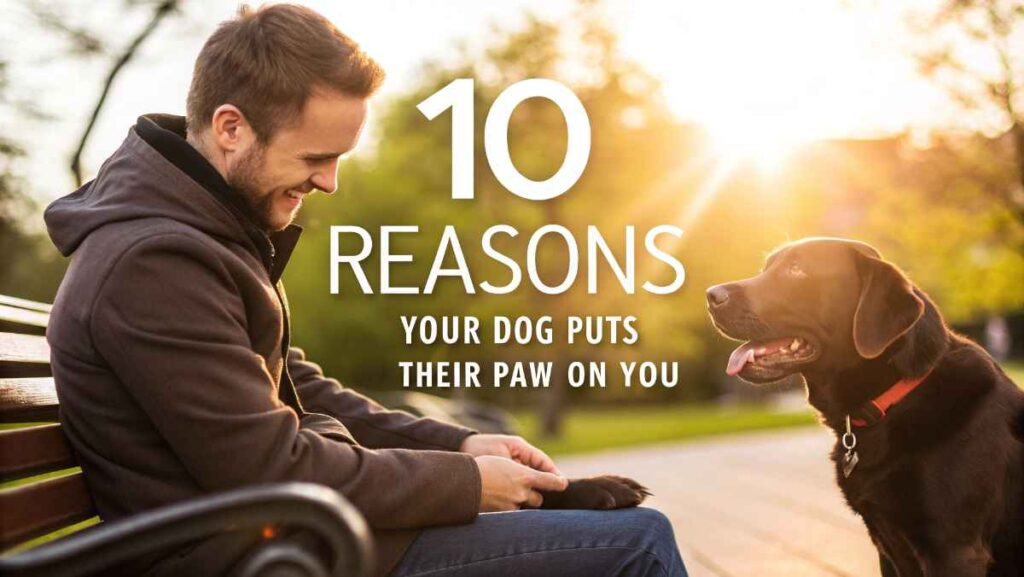
1. They Want Your Attention
This is the #1 reason, hands down. If you’re distracted — working on your laptop, watching TV, or staring at your phone — your dog may place a paw on you as a polite (or not-so-polite) interruption.
Dogs are creatures of association. If placing a paw on you once earned a belly rub, a treat, or even just eye contact, they will absolutely try it again. And again. And again.
Unlike barking or jumping, pawing is a relatively subtle way to get your attention, which is why many dogs prefer it over louder methods. It’s direct, physical, and hard to ignore.
How to respond: If you don’t want to reinforce demanding behavior, avoid immediately rewarding the pawing. Instead, wait for your dog to settle, then give them attention on your terms.
2. They’re Showing You Love
Sometimes, a paw is simply a hug. When you’re cuddled up with your dog and they rest their paw gently on your arm or leg, they’re expressing affection and reinforcing your bond.
Canine behavior experts describe this as a sign of affection, closeness, and trust — your dog essentially “petting you back.” It’s the canine equivalent of holding hands, and it’s one of the sweetest things a dog can do.
Dogs experience love through the same neurotransmitters humans do — serotonin, oxytocin, and dopamine. When they’re feeling warm and connected to you, a gentle paw is one of their favorite ways to say I love you.
How to respond: Lean into it. Pet them back, make eye contact, and enjoy the moment.
3. It’s Dinner Time (And They Know It)
Dogs have an almost supernatural awareness of their feeding schedule. If your dog starts pawing at you around the same time every day, there’s a good chance they’re reminding you that their bowl isn’t going to fill itself.
Many dog owners notice their pup becomes noticeably restless about 30 minutes before mealtime. The pawing may be accompanied by pacing, sitting near the food bowl, or staring intensely at the kitchen.
How to respond: Feed them on a consistent schedule to reduce food-related pawing. Avoid giving treats immediately after pawing, as this reinforces the behavior.
4. They Need to Go Outside
A paw on your leg can also be your dog’s polite way of saying nature is calling. Dogs that are well house-trained often develop personalized signals for needing a bathroom break — and for some, that signal is a well-placed paw.
This is especially common in dogs that haven’t taken to other signals like barking at the door or ringing a bell. If your dog paws at you shortly after eating or after a long nap, that’s a good clue about what they’re communicating.
How to respond: Take them outside promptly and praise them when they go. If you want a clearer signal, you can train them to ring a bell by the door instead.
5. They’re Anxious or Stressed
Not all pawing is cheerful. Anxious dogs often seek physical reassurance from their owners, resting a paw on them as a calming signal — essentially saying I’m scared, please help.
This type of pawing is typically softer and more persistent. It’s often paired with other anxious body language: ears pinned back, a low or tucked tail, lip licking, yawning, or whimpering. Common triggers include thunderstorms, fireworks, separation anxiety, vet visits, or changes in the home environment.
How to respond: Offer calm, gentle reassurance. Don’t make a big fuss (which can amplify their anxiety), but do provide a soothing voice and steady physical presence. If anxiety is frequent or severe, consult your veterinarian.
6. They Want to Play
A dog with a wagging tail, bright eyes, and a bouncy paw tapping your leg is sending a clear message: Let’s go!
Dogs use their paws to initiate play with other dogs, and they apply the same logic to their human companions. This kind of pawing is energetic and enthusiastic — sometimes paired with play bows, toy dropping, or excited spinning.
How to respond: If you have the time and energy, play with them! Regular play sessions reduce attention-seeking behaviors throughout the day. If now isn’t a good time, redirect them to a toy or puzzle feeder.
7. They’re Saying “Please Stop”
Pawing isn’t always a request for more — sometimes it’s a boundary. If you’re petting your dog in a spot they dislike, or handling them in a way that makes them uncomfortable (like putting on a harness or trimming their nails), they may place a paw on your hand as a polite signal to stop.
This is important body language to respect. A dog that feels consistently ignored when communicating discomfort may eventually escalate to growling or snapping. Their paw is the polite version — listen to it.
How to respond: Pause what you’re doing, check your dog’s overall body language, and give them a moment. If grooming or vet care is necessary, make it a positive experience with treats and breaks.
8. They Can Feel You’re Upset
Dogs are remarkably attuned to human emotions. Research has consistently shown that dogs can detect changes in our tone, facial expressions, body language, and even scent when we’re stressed, sad, or anxious.
If you’ve been crying, feeling down, or having a hard day, don’t be surprised if your dog wanders over and places a gentle paw on you. They’re not asking for anything — they’re offering comfort. It’s one of the most profoundly empathetic things dogs do, and it reflects the depth of the human-canine bond.
How to respond: Accept the comfort. Let them sit with you. Dogs make excellent emotional support companions.
9. It’s a Learned Behavior
Has your dog ever been taught “shake” or “give paw”? If so, they may generalize that behavior and offer their paw spontaneously — especially if they associate it with treats or positive reactions.
Some dogs become prolific pawers simply because every time they’ve done it, something good happened. This is basic reinforcement learning. Your dog isn’t being manipulative — they’re just being smart.
How to respond: If the behavior is becoming excessive, stop reinforcing it inadvertently. Only reward pawing when it’s requested (as part of a trick), not when it happens randomly.
10. They’re Returning the Affection
Dogs learn by observing us. When you pet your dog, stroke their fur, or hold them close, they experience it as a deeply positive interaction. Some dogs figure out that they can reciprocate — resting their paw on you is their version of petting you back.
It’s a beautiful example of social mirroring: your dog is doing to you what you do to them, because it feels good and it connects you both.
How to respond: Enjoy this mutual exchange. It’s a sign of a deeply trusting and affectionate bond.
How to Read Their Body Language
The style of pawing tells you just as much as the context. Here’s a quick guide:
| Pawing Style | Likely Meaning |
| Soft, single placement | Gentle affection or check-in |
| Repeated tapping | Urgency — food, bathroom, attention |
| Scraping or scratching | Frustration or high excitement |
| Held paw, sustained contact | Comfort-seeking or deep affection |
| Paw lift without touching | Stress or uncertainty |
Always look at the full picture: tail position, ear position, eye contact, and overall posture will tell you what the paw alone cannot.
Should You Let Your Dog Paw at You?
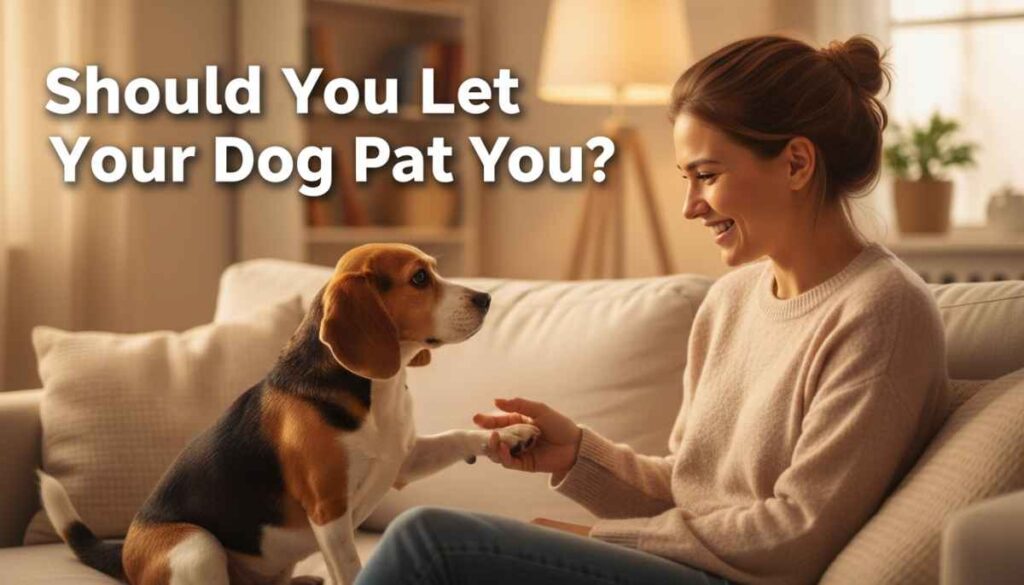
In most cases, yes — pawing is a normal, healthy form of dog communication. The key is context and consistency.
Healthy pawing looks like: Gentle contact, easy to redirect, appropriate timing, accompanied by relaxed body language.
Problematic pawing looks like: Constant, demanding, escalating when ignored, paired with jumping or barking, or occurring obsessively.
If your dog’s pawing feels excessive, the first step is to rule out unmet needs. Are they getting enough exercise? Mental stimulation? Consistent feeding times? Often, increasing daily enrichment dramatically reduces attention-seeking behaviors.
How to Stop Excessive Pawing (Without Hurting the Bond)
- Don’t reinforce it accidentally — avoid giving treats, attention, or eye contact immediately after unwanted pawing
- Redirect to a command — ask for a “sit” or “down” before rewarding them
- Channel it into tricks — teach “shake,” “high-five,” or “wave” so pawing becomes a cued behavior, not a demand
- Increase enrichment — puzzle toys, training sessions, and regular walks reduce boredom-driven pawing
- Stay consistent — everyone in the household needs to respond the same way to avoid confusion
When to Talk to Your Vet
Most pawing is completely normal. However, consult your veterinarian if:
- Pawing is sudden and out of character
- It’s accompanied by signs of pain (limping, whimpering, licking a paw)
- Your dog seems unusually anxious or distressed
- The behavior is compulsive and doesn’t respond to redirection
In rare cases, sudden behavioral changes can signal an underlying medical issue worth investigating.
Why Does My Dog Put Their Paw On Me?
Your dog puts their paw on you because they love you and want your attention. It’s their sweet way of communicating, like a gentle tap saying, “Hey, I’m here. Notice me, please!”
Why Do Dogs Put Their Paws On People?
Dogs put their paws on people to show affection, ask for attention, or simply feel close to someone they trust. It’s their version of a hug, warm, honest, and completely adorable every single time.
Why Do Dogs Put Their Paw On Your Face?
When your dog touches your face with their paw, it’s pure love. They’re getting as close to you as possible. It’s their way of saying, “You’re my favorite person, and I want you to know it.”
Why Does My Dog Put His Paw On My Arm When I Pet Him?
Your dog puts his paw on your arm while you pet him because he’s loving every second of it. He’s returning the affection, basically petting you back and saying, “Don’t stop, this feels amazing!”
Why Does My Dog Put His Paw On My Hand When I Pet Him?
He’s gently asking you to keep going! When your dog places his paw on your hand mid-pet, he’s telling you the attention feels wonderful and he doesn’t want the moment between you two to ever end.
Why Does My Dog Put His Paw On Me When I Stop Petting Him?
The moment you stop, that paw appears because your dog simply isn’t done yet! He’s politely asking for more love. In his mind, you stopping too soon is unacceptable and needs to be corrected right away.
Why Does My Dog Put His Paw On Me When He Sleeps?

Sleeping with a paw on you means your dog feels completely safe and secure beside you. It’s a deeply comforting habit. He wants to stay connected to you even while drifting off into dreamland peacefully.
Why Does My Dog Put His Paw On Me And Lick Me?
Paw plus licking is a double dose of doggy affection! Your dog is showering you with love the only way he knows how. It means he trusts you completely and sees you as his whole world.
Why Do Dogs Put Their Paw On Your Chest?
Placing a paw on your chest is your dog’s way of getting close to your heart, literally. It’s an affectionate, trusting gesture that says, “I feel safe with you, and I want to be near you always.”
Why Do Dogs Put Their Paw On Your Foot?
A paw on your foot is your dog’s gentle reminder that they’re right there with you. It’s their way of staying connected without being too demanding, like a quiet whisper saying, “I’m here. Don’t forget me.”
FAQs
What Does It Mean When Your Dog Rests Their Paw On You?
It means your dog loves you and feels safe. They are simply saying, “I trust you completely.”
How Do You Tell If Your Dog Is Bonded To You?
Your dog follows you everywhere, makes eye contact, wags their tail and always wants to be near you.
How Do Dogs Say They Are Sorry?
Dogs say sorry by giving puppy eyes, tucking their tail, lowering their head and gently licking your hand.
How Do I Say “I Love You” In Dog Language?
Speak softly, blink slowly, and give gentle ear rubs. Your dog understands love through your calm, warm energy.
How Do I Tell My Dog I Love Him?
Pet him gently, speak in a soft voice and spend quality time together. Dogs feel love through your actions.
Do Dogs Understand What We Say?
Yes! Dogs understand certain words and your tone. They read your emotions better than most people ever could.
What Annoys Dogs The Most?
Loud noises, tight hugs, inconsistent rules and being ignored annoy dogs the most. They love calm and routine.
Why Do Dogs Stiff Arm You?
Dogs stiff arm you to create space or show mild discomfort. It is their polite way of saying stop.
Why Does My Dog Put Their Mouth And Paw On Me?
Your dog is showing playful affection and love. It is their way of bonding and keeping your attention close.
Why Do Dogs Insist On Putting Their Paw On You?
Because it works every time! Your dog learned that one gentle paw gets your love and attention instantly.
Final Thoughts
When your dog puts their paw on you, they’re not being random — they’re reaching out in the most direct way they know how. Whether it’s love, hunger, anxiety, or playfulness, that gentle (or not-so-gentle) tap is a window into your dog’s inner world.
The more you understand what your dog is communicating, the stronger your bond becomes. And honestly? Being chosen by a dog — being pawed at by a creature who loves you completely — is one of life’s great privileges.
So next time that paw lands on your leg, take a moment. Your dog has something to say.