Do Dog Whiskers Grow Back | Vet-Backed Timeline & Facts

Yes, dog whiskers do grow back if they are cut, trimmed, or plucked, provided the follicles remain intact. Most whiskers grow back naturally over time, although full regrowth can take up to two months, depending on your dog’s health and age.
In this guide, you’ll learn how dog whiskers regrow, how long the process takes, what happens if they’re cut or pulled out, and when it’s time to contact your veterinarian.
What Are Dog Whiskers?
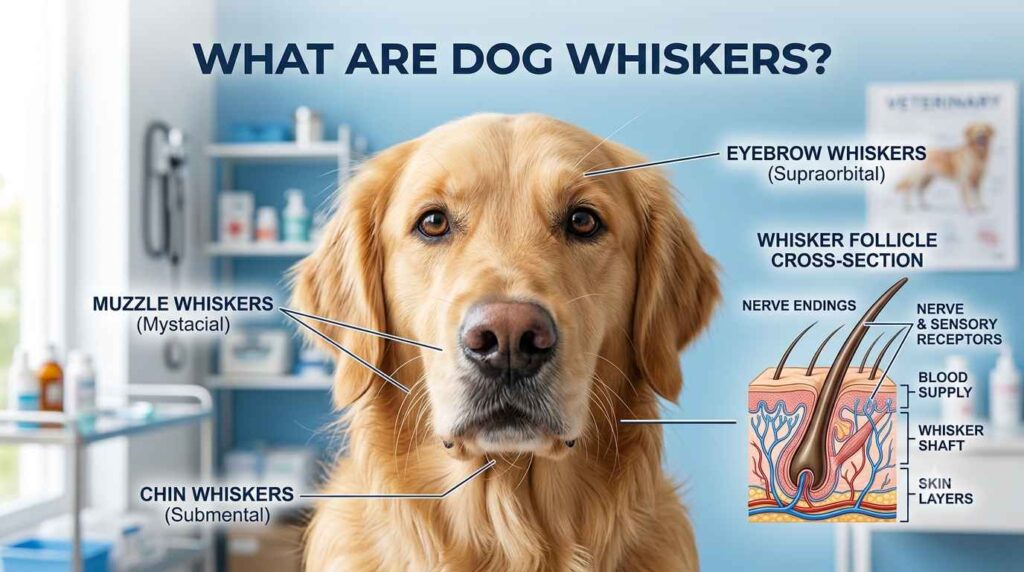
Dog whiskers, also called vibrissae, are specialized sensory hairs that are much thicker and deeper than regular fur. Unlike ordinary hair, each whisker is connected to a follicle filled with blood vessels and surrounded by numerous nerve endings.
These sensitive hairs help dogs:
- Detect nearby objects
- Navigate in dim light
- Judge narrow spaces
- Sense changes in airflow
- Protect their eyes and face
- Explore unfamiliar environments
You’ll find whiskers around a dog’s muzzle, above the eyes, under the chin, and sometimes on the cheeks.
Because they serve an important sensory function, veterinarians generally recommend leaving them intact whenever possible.
Do Dog Whiskers Grow Back?
Yes. If you’re wondering do whiskers grow back on dogs, the answer is usually yes. Dogs naturally replace old whiskers throughout their lives, much like they shed regular hair. Whether a whisker falls out naturally, breaks, or is accidentally trimmed, a new one usually grows from the same healthy follicle.
However, the situation changes if the follicle itself is severely damaged by trauma, burns, deep wounds, or certain medical conditions. In those cases, regrowth may be delayed or, in rare situations, may not occur at all. Fortunately, permanent follicle damage is uncommon.
How Long Does It Take Dog Whiskers to Grow Back?
Many owners ask how fast do dog whiskers grow back or how long do dog whiskers take to grow back.
There isn’t one exact timeline because every dog is different, but most healthy dogs follow a similar pattern.
| Situation | Expected Regrowth |
| Trimmed whiskers | 4–8 weeks |
| Broken whiskers | 4–8 weeks |
| Naturally shed whiskers | Several weeks |
| Pulled-out whiskers | 1–3 months |
| Follicle injury | May take longer or require veterinary evaluation |
Several factors affect regrowth, including:
- Age
- Breed
- Overall nutrition
- Skin health
- Hormonal balance
- Damage to the follicle
Young healthy dogs often regrow whiskers faster than senior dogs.
Do Dog Whiskers Grow Back If Cut?
One of the most common questions is do dog whiskers grow back if cut. The good news is yes.
When whiskers are cut with grooming scissors, only the visible hair shaft is removed. The living follicle remains beneath the skin, allowing the whisker to grow back naturally over time.
Many people also ask do dogs whiskers grow back if you cut them during grooming. In most cases, they do. While the whiskers are shorter, your dog may temporarily lose some of the extra sensory information those whiskers provide, but the effect is usually temporary until they regrow.
Although they will grow back, intentionally trimming whiskers isn’t recommended unless advised for a specific medical reason.
Do Dog Whiskers Grow Back If Trimmed?
Yes. Whether you accidentally trimmed them at home or a groomer shortened them, do dogs whiskers grow back if trimmed? In nearly all healthy dogs, the answer is yes.
Trimming doesn’t permanently damage the follicle because the root stays safely beneath the skin.
After trimming, your dog may:
- Need time to adjust to shorter whiskers
- Be slightly less aware of nearby objects
- Continue living normally as the whiskers slowly return
Most owners notice steady regrowth within several weeks.
Do Dog Whiskers Grow Back If Pulled Out or Plucked?
Many owners become worried after rough play or an accident causes a whisker to come out completely.
If you’re asking do dogs whiskers grow back if pulled out or do dog whiskers grow back if plucked, the answer is usually yes—but it often takes longer than a simple trim.
Pulling out a whisker temporarily injures the follicle, so your dog’s body needs additional time to repair the area before producing a new whisker.
Monitor the area for:
- Redness
- Swelling
- Bleeding
- Pain
- Signs of infection
If these symptoms develop, contact your veterinarian.
Do Dog Whiskers Grow Back If Burned?

Heat injuries are different from simple trimming. If you’re wondering do dog whiskers grow back if burned, it depends on how severe the burn is.
A mild singe that only damages the whisker itself usually heals without problems, and new whiskers often appear within several weeks.
However, burns that damage the skin and follicle may slow regrowth or permanently affect the whisker.
Any facial burn should be evaluated by a veterinarian because the eyes, nose, and surrounding tissues can also be injured.
Do Dog Whiskers Fall Out Naturally?
Yes. Many owners panic after finding a single whisker on the floor. Fortunately, dog whiskers naturally fall out as part of the normal hair growth cycle. New whiskers replace old ones throughout your dog’s life.
Natural shedding is usually nothing to worry about if:
- Only one or two whiskers are missing
- Your dog seems comfortable
- The skin looks healthy
- New whiskers begin appearing over time
However, losing many whiskers at once may indicate an underlying skin condition or illness that deserves veterinary attention.
Do Dog Whiskers Have Nerves?
Yes. Many people ask, Do dog whiskers have nerves? The whisker itself is made of keratin, just like regular hair. However, the follicle at its base is packed with blood vessels and nerve endings.
These nerves allow dogs to detect:
- Tiny movements
- Air currents
- Nearby objects
- Vibrations
- Touch
This is why whiskers are considered one of a dog’s most important sensory tools.
Do Dog Whiskers Hurt When Cut?
A common concern is Do dog whiskers hurt when cut? The whisker itself doesn’t contain nerves, so cutting the visible portion is similar to trimming regular hair and doesn’t usually cause pain.
However, pulling, twisting, or damaging the follicle can be uncomfortable because the follicle is richly supplied with nerves.
For this reason, owners should avoid:
- Pulling whiskers
- Plucking whiskers
- Rough grooming
- Children playing with whiskers
Gentle handling helps protect your dog’s sensitive facial structures.
Effects of Cutting Dog Whiskers
Although trimming whiskers doesn’t usually cause pain, there can be temporary effects.
Possible effects include:
- Reduced awareness of nearby objects
- Slightly slower navigation in dark areas
- Less sensitivity around the face
- Minor changes while exploring unfamiliar spaces
Fortunately, these effects improve as the whiskers regrow. Most dogs continue eating, playing, and behaving normally after accidental trimming.
Factors That Affect Whisker Regrowth
Every dog heals at a different pace. Several factors influence how quickly whiskers return.
- Age: Puppies often grow new whiskers faster than senior dogs.
- Nutrition: A balanced diet rich in protein, vitamins, and minerals supports healthy hair growth.
- Skin Health: Healthy skin creates a better environment for new whiskers.
- Underlying Illness: Hormonal disorders, skin diseases, or chronic illnesses may slow regrowth.
- Follicle Damage: Deep injuries affecting the follicle may delay or prevent new whiskers from growing.
Can You Help Whiskers Grow Back Faster?

There isn’t a safe way to speed up whisker growth dramatically, but you can support healthy regrowth by:
- Feeding a complete, balanced diet
- Providing fresh water daily
- Keeping the skin clean
- Avoiding repeated trimming
- Treating skin infections promptly
- Scheduling regular veterinary checkups
Healthy dogs usually regrow whiskers naturally without additional treatment.
When Should You Contact a Veterinarian?
Most missing whiskers are harmless. However, seek veterinary advice if you notice:
- Facial burns
- Deep cuts
- Persistent bleeding
- Swelling
- Pus or discharge
- Many whiskers falling out suddenly
- No signs of regrowth after several months
- Changes in eating or behavior following facial injury
Early treatment can prevent complications if an injury or medical condition is affecting the follicle.
Frequently Asked Questions
Do Dogs Shed Whiskers?
Yes, dogs naturally shed whiskers just like regular hair. New whiskers usually grow back, replacing old ones as part of a healthy growth cycle.
Do Dogs Grow Whiskers Back After Grooming?
Yes, dogs usually grow whiskers back after grooming if they were accidentally trimmed. New whiskers slowly grow from healthy follicles over several weeks.
Do Whiskers on Dogs Grow Back After Being Cut?
Yes, whiskers on dogs usually grow back after being cut because the hair follicle remains alive beneath the skin and continues producing new growth.
Can Puppies Regrow Whiskers?
Yes, puppies can regrow whiskers after they are cut or naturally shed. Healthy puppies often grow new whiskers faster than older dogs.
Why Is My Dog Missing Only One Whisker?
A missing whisker is usually normal because dogs naturally shed individual whiskers. A new whisker typically grows back without causing any problems.
Can Damaged Whiskers Affect Balance?
Damaged whiskers do not affect your dog’s balance, but they can temporarily reduce awareness of nearby objects until new whiskers grow back.
Do Dogs Grow Their Whiskers Back?
Yes, dogs grow their whiskers back naturally after trimming, shedding, or minor damage, as long as the whisker follicle remains healthy and intact.
How Long Do Whiskers Take to Grow Back After Trimming?
Most trimmed dog whiskers begin growing within several weeks and may take one to three months to return to their normal length.
Why Do Dogs Have Whiskers in Minnesota?
Dogs in Minnesota have whiskers for the same reasons as dogs everywhere. Whiskers help them sense objects, protect their face, and explore safely.
What Happens If a Groomer Accidentally Cuts a Puppy’s Whiskers?
If a groomer accidentally cuts a puppy’s whiskers, they usually grow back naturally. The puppy may temporarily lose some facial sensitivity without lasting harm.
Final Thoughts
If you’ve been asking “Do dog whiskers grow back?”, the answer is reassuring for most dog owners.
Whether your dog’s whiskers were accidentally trimmed, broken during play, or naturally shed, they usually grow back without any problems. The key factor is whether the follicle beneath the skin remains healthy. Most dogs begin showing new whisker growth within a few weeks, although full regrowth can take one to three months.
Avoid trimming whiskers whenever possible, monitor any facial injuries closely, and contact your veterinarian if you notice swelling, infection, or a lack of regrowth after several months. With proper care and good overall health, your dog’s whiskers should return and continue providing the important sensory information they rely on every day.