Why Do Dogs Chew Their Nails: 8 Causes & Vet-Backed Guide!

Dogs chew their nails due to allergies, overgrown nails, infections, anxiety, boredom, injuries, or parasites. A vet check helps find the exact cause.
In this article, we’ll break down every reason your dog chews their nails — and show you easy ways to stop it before it becomes a real problem.
Is It Normal for Dogs to Chew Their Nails?
Yes — but only up to a point. Dogs do groom themselves, and a quick nibble at their nails every now and then is completely fine. Think of it like how we might file a rough nail edge.
Normal nail grooming in dogs lasts about 10 to 15 seconds. If your dog is doing it for longer than that, or doing it over and over again throughout the day, that’s when you need to pay closer attention.
The key is watching for patterns. If the chewing is rare and quick, it’s probably nothing. If it’s becoming a daily habit, something is likely bothering your dog.
8 Reasons Why Dogs Chew Their Nails
1. Overgrown Nails
This is one of the most common — and most preventable — reasons. When a dog’s nails grow too long, they become uncomfortable.
Long nails can press against the floor with every step, change the way your dog walks, and even start curling into the paw pad over time. That causes real pain. So your dog does what makes sense to them — they chew the nails to try and fix the problem.
A simple sign that your dog’s nails are too long? If you can hear a clicking sound when they walk on hard floors, it’s time for a trim.
Regular grooming is the easy fix here. Trim your dog’s nails every 3 to 4 weeks, or visit a groomer if you’re not comfortable doing it yourself.
2. Allergies (The Most Common Root Cause)

Here’s something that surprises a lot of dog owners — allergies are actually the number one cause of excessive paw licking and nail chewing in dogs.
Dogs can be allergic to all kinds of things: pollen, dust mites, mold, grass, certain foods, and even household cleaning products. When these allergens irritate their skin, the paws are usually one of the first places to feel it. So your dog licks and chews to get some relief.
One study in Veterinary Dermatology found that nearly 30% of dogs with ongoing paw irritation had undiagnosed allergies. That’s a huge number.
If your dog chews their nails more during certain seasons, or after walks in grassy areas, allergies could be the cause. A vet can run tests to find out what your dog is reacting to and recommend the right treatment.
3. Yeast or Bacterial Infections
If you notice your dog’s nail area looks red, swollen, or smells a bit off — an infection might be to blame.
Yeast infections are especially common in dogs. Yeast loves warm, moist places, and the space between your dog’s toes is a perfect spot for it to grow. Once it takes hold, it causes intense itching. Your dog chews to get relief. But the chewing adds more moisture, which helps the yeast grow more. It becomes a frustrating cycle.
Bacterial infections work in a similar way. A small cut or broken nail can open the door for bacteria to get in. The infection makes the area sore and itchy, so your dog keeps chewing — which makes things worse.
If you see redness, swelling, or any kind of discharge around your dog’s nails, get them to a vet. Infections don’t clear up on their own.
4. Anxiety and Stress
Dogs feel stress just like we do. And when they’re anxious, they look for ways to calm themselves down.
For a lot of dogs, chewing their nails becomes a self-soothing habit — similar to how some people bite their nails when they’re nervous. Research has shown that about 40% of dogs that regularly chew their nails show signs of anxiety or stress.
Common stress triggers include:
- Being left alone for long periods
- Loud noises like thunderstorms or fireworks
- Moving to a new home
- A new pet or person joining the household
If your dog mostly chews their nails when you’re about to leave, during storms, or when there’s a big change at home, stress is likely the cause.
Talk to your vet about anxiety solutions. These can range from behavioral training to calming supplements or, in some cases, medication.
5. Parasites — Fleas, Ticks, and Mites
Tiny parasites can cause big problems. Fleas, ticks, and microscopic mites often hide between a dog’s toes and around the nail beds. When they bite, they cause intense itching. Your dog’s natural response is to chew and scratch at the irritated area.
Flea allergy dermatitis is worth mentioning here too. Some dogs are highly sensitive to flea saliva, and even a single flea bite can trigger weeks of itching and chewing.
Check your dog’s paws and between their toes regularly, especially after outdoor walks. Keep up with flea and tick prevention treatments year-round — this alone can prevent a lot of unnecessary chewing.
6. Injured or Broken Nails
Sometimes the reason is as simple as a broken nail. Dogs can break a nail by catching it on carpet, during rough play, or from digging.
When a nail breaks, it can split up toward the base of the toe, sometimes exposing a sensitive area called the quick. That’s painful. Your dog will naturally try to chew or bite the broken nail to ease the discomfort.
Broken nails are more common when nails are left too long, so regular trimming helps prevent this too. If you find a broken nail, don’t try to pull it off. Keep the area clean and take your dog to the vet. They can safely remove it and prevent infection.
7. Boredom
Yes — bored dogs chew their nails too. Dogs need both physical exercise and mental stimulation every day. Without it, they get restless and start picking up odd habits.
Nail chewing is one of them. It gives them something to do, and over time, it becomes a repetitive behavior they fall back on whenever they’re under-stimulated.
If your dog chews their nails mostly when they’ve been sitting around the house for hours, boredom might be the issue.
The fix is straightforward — more walks, more playtime, and puzzle toys or treat-dispensing games to keep their mind busy. A tired dog is a happy dog.
8. Underlying Medical Conditions
In less common cases, nail chewing can be linked to a medical condition affecting the nails themselves. There are diseases known as onychopathies — conditions that directly affect a dog’s claws. These can cause nails to grow abnormally, become brittle, soften, or split.
One example is Symmetric Lupoid Onychodystrophy (SLO), a condition that targets the nails and causes real discomfort. Arthritis is another one to consider, especially in older dogs. When joints ache, dogs sometimes shift their focus to their nails or paws as a way of dealing with the discomfort.
If no obvious cause explains your dog’s nail chewing, a full vet checkup is the right next step.
Warning Signs You Should Not Ignore
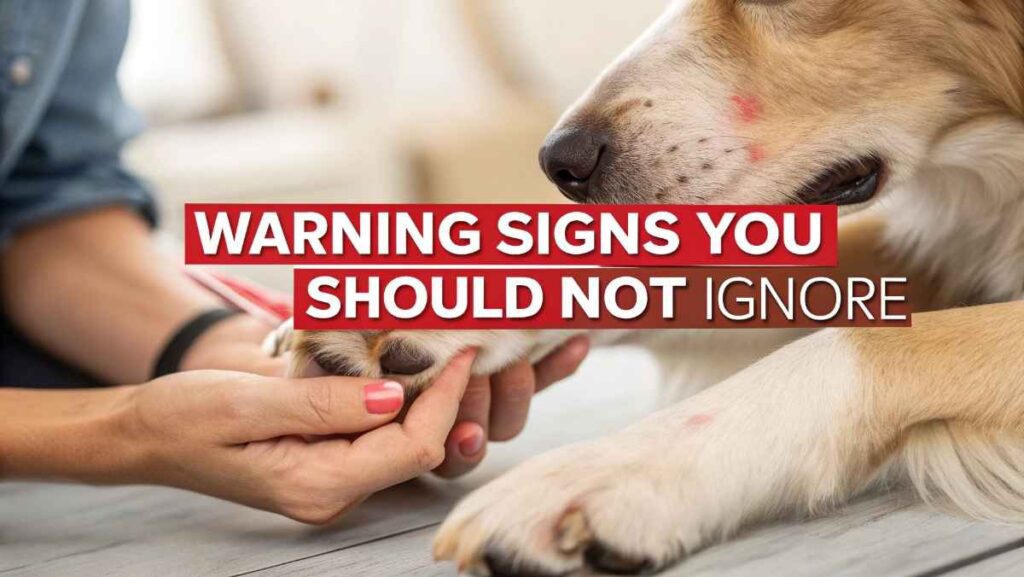
Most of the time, nail chewing is manageable. But there are situations where you need to call your vet right away:
- The nail area looks red, puffy, or swollen
- There’s any kind of discharge or unusual smell
- Your dog is limping or seems to be in pain
- The chewing has suddenly become much more frequent
- Your dog is pulling nails out completely
- You see bleeding
These signs point to something that needs professional attention. Don’t wait and hope it gets better on its own.
How to Stop Your Dog from Chewing Their Nails
Here’s a practical breakdown of what you can do:
Trim the nails regularly. Every 3 to 4 weeks is a good routine. If you can hear clicking on the floor, it’s overdue.
Clean the paws after walks. Wipe down your dog’s paws when they come inside, especially during high-pollen seasons. This removes allergens and debris that can cause irritation.
Use chew toys and mental games. If boredom is the issue, give your dog something better to focus on. Puzzle feeders, Kongs, and chew toys work really well.
Check for parasites. Use a vet-recommended flea and tick prevention product consistently.
Visit the vet for persistent chewing. If the behavior doesn’t stop after a week or two, or if you see any of the warning signs above, get a professional opinion. Treatments vary — allergies may need antihistamines or a diet change, infections need medication, and anxiety may need behavioral support.
How Can I Get My Dog to Stop Chewing His Nails
Trim your dog’s nails regularly, clean their paws after walks, and give them chew toys to stay busy. If the chewing keeps happening, visit your vet — there may be an allergy or infection causing it.
Dog Biting and Pulling Nails
If your dog is biting and pulling at their nails, it usually means something is hurting or irritating them. Check for a broken nail, swelling, or redness. If you spot anything unusual, don’t wait — call your vet.
Why Do Dogs Chew Their Nails at Night
At night, the house gets quiet and your dog has nothing to distract them. If they’re feeling anxious or bored, nail chewing kicks in. Try a calm bedtime routine and make sure they’ve had enough exercise during the day.
Do Dogs Bite Their Nails to Trim Them
Yes, sometimes they do. Dogs don’t have nail clippers, so they occasionally nibble a rough or sharp edge to smooth it out. It’s normal in small amounts — but if it’s constant, something else is likely going on.
Dog Biting Nails and Licking Paws
When a dog bites their nails and licks their paws together, allergies are usually the first thing to suspect. Pollen, dust, or food sensitivities can make the paw area itchy and uncomfortable. A vet can help find the trigger.
Why Is My Dog Biting His Nails After Grooming
After grooming, a nail may feel sharp, uneven, or slightly sensitive. Your dog bites to smooth it out or ease the discomfort. It usually settles in a day or two. If it continues longer, the nail may have been cut too short.
Do Dogs Bite Their Nails When They’re Too Long
Absolutely. Long nails press against the floor and cause real discomfort with every step. Dogs bite them trying to fix the problem themselves. The best solution is simple — keep up with regular nail trims every three to four weeks.
Frequently Asked Questions
Is It Normal for a Dog to Chew Their Nails?
Yes, occasional nibbling is normal. But if your dog does it constantly, something is likely bothering them — check their paws.
How Do I Make My Dog Stop Biting His Nails?
Trim nails regularly, clean paws after walks, and offer chew toys. If it continues, visit your vet for proper guidance.
Do Dogs Trim Their Own Nails by Biting Them?
Sometimes, yes. Dogs may nibble a rough edge to smooth it out. But biting alone can never replace proper nail trimming.
Is It Okay for Dogs to Eat Fingernails?
It’s not ideal. Human fingernails can carry germs and chemicals. Try to keep them away from your dog just to be safe.
What Dog Breeds Are Prone to Nail Issues?
Breeds like Dachshunds, Basset Hounds, and Greyhounds often face nail problems. Regular grooming and vet checkups help keep their paws healthy.
Final Thoughts
Dogs chew their nails for a reason. It might be something simple like nails that need a trim, or something that needs a vet’s help like an allergy or infection. The important thing is not to ignore it if it’s happening a lot.
Watch your dog. Notice when and how often it happens. Check their paws for any visible signs of irritation. And when in doubt, your vet is always the right call. Your dog can’t tell you what’s wrong in words — but their behavior says a lot.